The Institutional Judge
Uncovering the Politics and Practices Behind Court Reform
Toby Susan Goldbach
The Book
The Institutional Judge
Uncovering the Politics and Practices Behind Court Reform
NYU Press · Forthcoming
Drawing on interviews with judges and court staff around the world, The Institutional Judge reveals how judges quietly reshape dispute processing—designing legal procedure, alternative dispute resolution systems, specialized courts, and judicial education programs—and, by examining this behind-the-scenes work, offers new perspectives on judicial politics research, judicial independence, and access to justice.
Be notified on publication
About the book
What do judges do when they are not hearing cases or writing decisions? Far more than conventional accounts suggest. Behind the scenes, judges work through committees, pilot programs, and judicial training networks to revise rules of procedure, design case-management and alternative dispute resolution systems, establish specialized courts, develop judicial education programs, and advise on courthouse construction. In doing so, judges quietly remake how disputes enter courts, which claims are processed, and what forms of justice become possible.
Toby S. Goldbach calls the figure behind this work the institutional judge: part adjudicator, part reformer, part educator. The institutional judge helps govern court infrastructure and judicial administration, drawing on judicial authority over process and procedure. By making this consequential labor visible, Goldbach opens it to scrutiny.
Drawing on over fifty interviews with judges, lawyers, and court staff, together with participant observation, archival research, and fieldwork in Canada, the United States, Ghana, Israel, and the Philippines, Goldbach follows the institutional judge in action. The book moves from US federal rulemaking governing settlements in mass-tort class actions to Canadian courthouse design and Indigenous restorative justice to transnational judicial education and the spread of court-connected ADR.
Written in an accessible, narrative socio-legal style, The Institutional Judge expands the study of judicial behavior and politics and rethinks judicial independence and legal instrumentalism—the use of law as a tool for social change. Across courthouse corridors and international conferences, Goldbach shows that court reform emerges not through rational, technocratic design but through bounded knowledge, contest and competition, carefully managed relationships, and what she calls “professional amateurism”: creative problem-solving beyond judges’ formal expertise. As courts face overloaded dockets, threats to judicial independence, and rapid technological change, the book offers a framework for asking who designs justice—and with what consequences.
Inside the book
- US judges making the rules for settlements in mass-tort class actions
- Canadian judges helping design courthouse spaces that accommodate Indigenous restorative justice
- Judges in transnational judicial education networks, and the spread of court-connected ADR
- Why the history of judge-led reform matters as courts adopt AI-enabled tools

Selected scholarship
Toby S Goldbach, "Managing Mass Tort Class Actions: Judicial Politics and Rulemaking in Three Acts" (2022) 77:1 University of Miami Law Review 88.
Toby S Goldbach, "Building the Aboriginal Conference Settlement Suite: Hope and Realism in Law as a Tool for Social Change" (2021) 46:1 Law & Social Inquiry 116.
Toby S Goldbach, "Why Legal Transplants?" (2019) 15:1 Annual Review of Law and Social Science 583.
Toby S Goldbach, "Judicial Practice in Action: Court Reform and Responsive Judges in Canada" in Tania Sourdin & Archie Zariski, eds, The Responsive Judge: International Perspectives, Ius Gentium: Comparative Perspectives on Law and Justice, vol 67 (Singapore: Springer, 2018) 217.
Read my scholarship in the Allard Research Commons →
Research areas: judicial reform and education, dispute resolution, legal transplants, class actions, and antisemitism and the law.
Courts around the world
Fieldwork for the book took me to courts and legal institutions in Canada, the United States, Ghana, Israel, and the Philippines. As Co-Chair of the Law and Society Association's Collaborative Research Network on Innovations in Judging, I help sustain an international network of more than 100 scholars, judges and practitioners from jurisdictions including Australia, Brazil, Canada, Chile, Israel, Pakistan, Singapore, the United States and the United Kingdom.


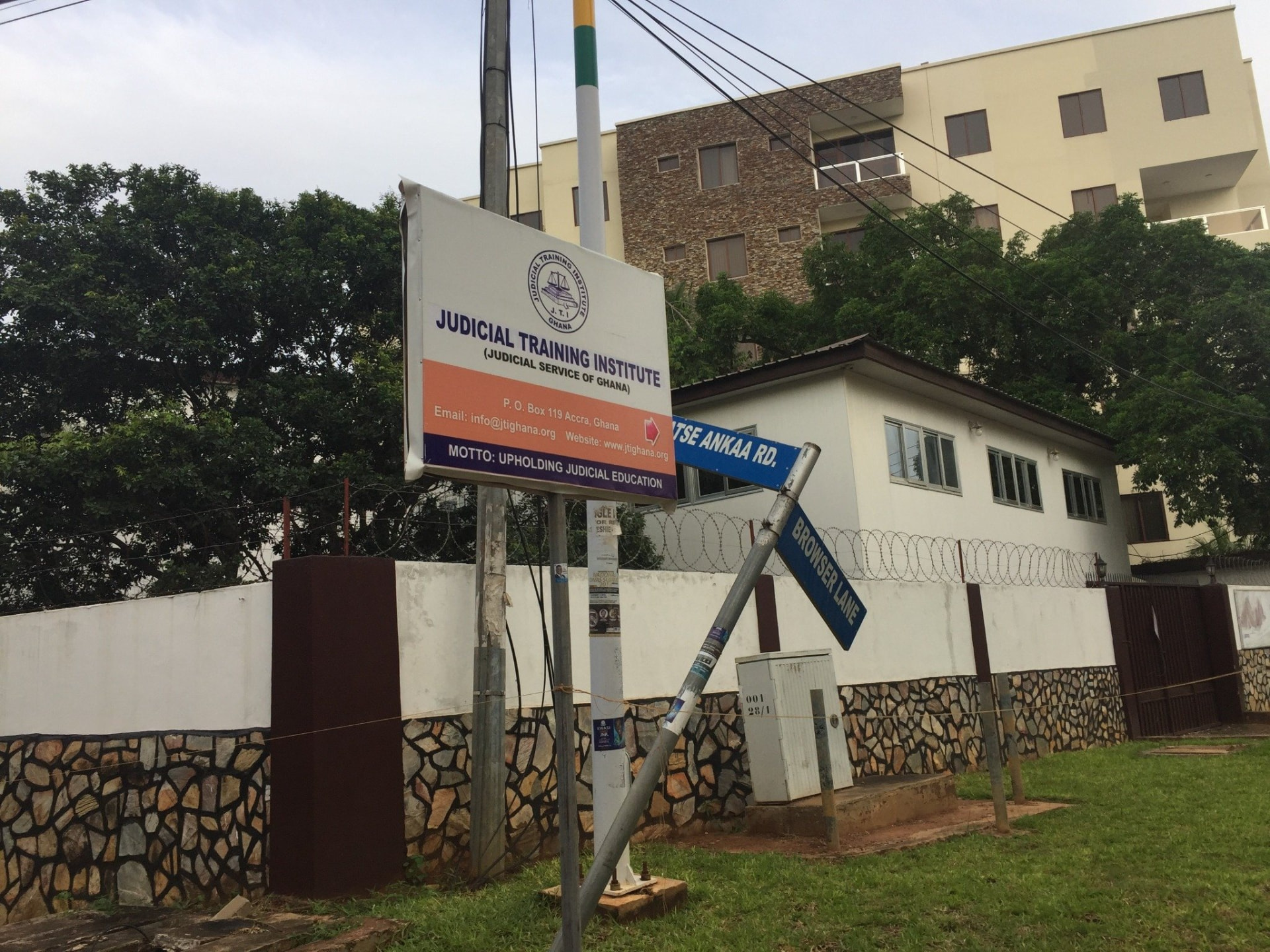
All photographs by the author.
Speaking and media
- Interview, CBC National News (radio), on the settlement fairness hearing in a class action by WestJet employees alleging sexual harassment (May 6, 2026)
- Interview, The Globe and Mail, "B.C. courts to halt criminal trials for FIFA World Cup" (February 27, 2026)
- Invited presentation, "Changing Judicial Culture in and out of the Courtroom," to a delegation of Colombian judges, organized by the Office of the Commissioner for Federal Judicial Affairs Canada (November 2022)
- Op-ed, "Why Justin Trudeau needs to appoint an Indigenous justice to the Supreme Court," Ottawa Citizen (March 8, 2022)
- Interview, Law360 Canada, "Judges must give notice if banishment is part of sentence, legal experts say" (October 16, 2019)
- Interview, CTV News Channel, commentary on Jody Wilson-Raybould's testimony regarding the SNC-Lavalin prosecution (February 27, 2019)
- Interview, CBC Power & Politics, on the appointment of Justice Sheilah Martin to the Supreme Court of Canada (November 29, 2017)
- Interview, Global News Radio, "The B.C. judge who 'ignored evidence,' 'erred in law' and put a ministry under fire" (November 27, 2017)
For speaking, media or academic inquiries: tobysusangoldbach@gmail.com